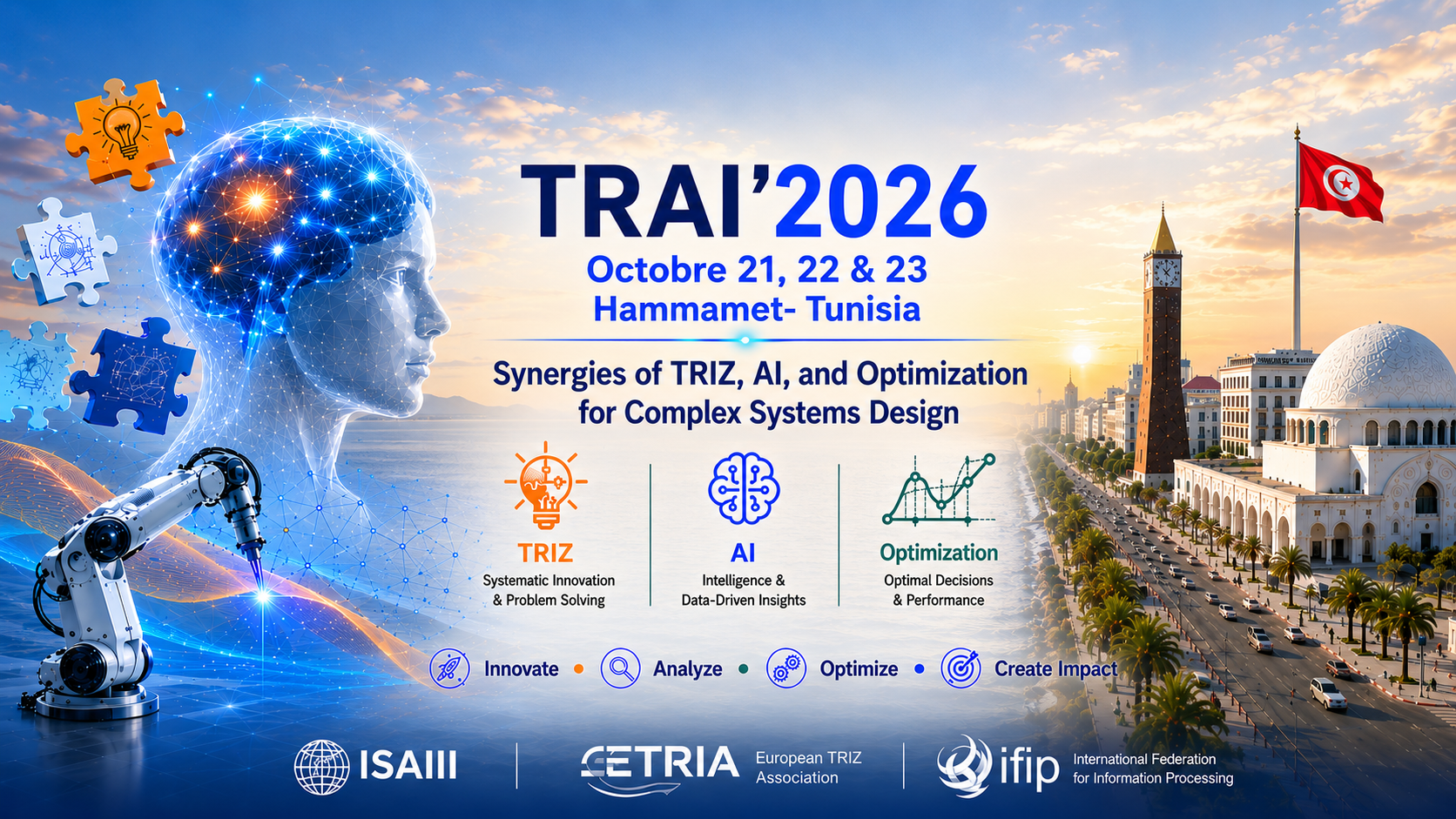
TRAI2026
Synergies of TRIZ, AI, and Optimization for Complex Systems Design
9 Amazing Keynote Speakers
Learn More
TRAI2026
Synergies of TRIZ, AI, and Optimization for Complex Systems Design
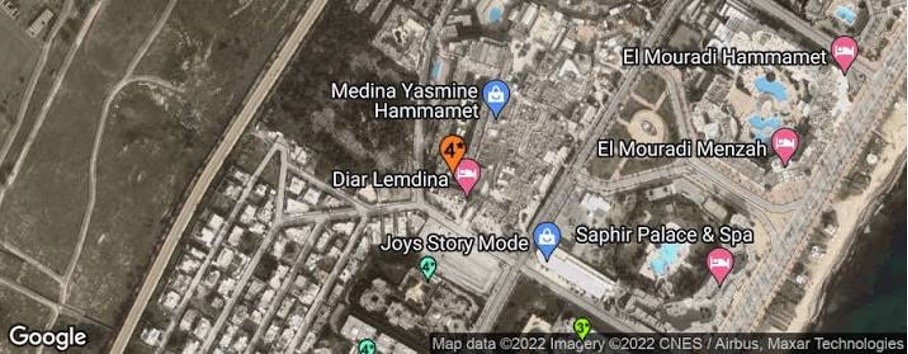
For participants arriving at Tunis-Carthage International Airport (TUN), Diar Lemdina Hotel in Yasmine Hammamet is approximately 73 km from the airport, with a typical journey time of around 50–70 minutes, depending on traffic.
A round-trip airport transfer can be arranged through our partner transportation agency at a cost of €50 per person. Participants wishing to use this service should provide their flight number, arrival and departure dates, and flight times in advance.
A direct private taxi or pre-booked transfer from Tunis-Carthage Airport to Yasmine Hammamet generally costs approximately €30–€45 per vehicle, one way, depending on the transportation provider and vehicle type.
Public transportation does not provide a direct connection from Tunis-Carthage Airport to Diar Lemdina Hotel. Participants may take a taxi from the airport to a train or bus station, continue by train or bus toward Barraket Sahel or Hammamet, and then take a local taxi to Diar Lemdina Hotel.
| Time | Program | Room |
|---|---|---|
| 09:00–12:30 | Registration & Badge Collection | Hall |
| 09:00–10:00 |
Opening Ceremony & Welcoming Speeches
Alaeddine Zouari — General Chair
Rémy Houssin — ETRIA Ahmed Haj Kacem — President of the University of Sfax Mounir Benaissa — Director of the Higher Institute of Industrial Management |
Plenary Room |
| 10:00–11:00 | Keynote — Prof. Denis Cavallucci (France) | Plenary Room |
| 11:00–11:30 | Coffee / Networking Break | — |
| 11:30–12:30 | Parallel Sessions | Plenary Room, Sesar 1, Sesar 2 |
| 12:30–14:30 | Lunch & Networking | — |
| 14:30–15:30 | Keynote — Dr. Boris Farber (USA) | Plenary Room |
| 15:30–16:30 | Parallel Sessions | Plenary Room, Sesar 1, Sesar 2 |
| 16:30–17:00 | Coffee / Networking Break | — |
| 17:00–18:00 | Parallel Sessions | Plenary Room, Sesar 1, Sesar 2 |
| 18:00 | End of First Day Activities | — |
| Time | Program | Room |
|---|---|---|
| 08:00–09:00 | Morning Coffee / Networking | — |
| 09:00–10:00 | Keynote — Prof. Stelian Brad (Romania) | Plenary Room |
| 10:00–11:00 | Parallel Sessions | Plenary Room, Sesar 1, Sesar 2 |
| 11:00–11:30 | Coffee / Networking Break | — |
| 11:30–12:30 | Parallel Sessions | Plenary Room, Sesar 1, Sesar 2 |
| 12:30–14:30 | Lunch & Networking | — |
| 14:30–15:30 | Keynote — Jim Belfiore (USA) | Plenary Room |
| 15:30–16:30 | Parallel Sessions | Plenary Room, Sesar 1, Sesar 2 |
| 16:30–17:00 | Coffee / Networking Break | — |
| 17:00–17:30 | Special Presentation — Dr. Iliass Ayaou | Plenary Room |
| 17:30 | End of Second Day Activities | — |
| 17:30–19:00 | Visit to the Yasmine Hammamet Medina | — |
| 19:00 | Gala Dinner | — |
| Time | Program | Room |
|---|---|---|
| 08:00–09:00 | Morning Coffee / Networking | — |
| 09:00–09:30 | Keynote — Prof. Souhail Dhouib (Tunisia) | Plenary Room |
| 09:30–10:50 | Parallel Sessions | Plenary Room |
| 10:50–11:30 | Coffee / Networking Break | — |
| 11:30–12:30 | Exchange Forum TRAI 2026 | Plenary Room |
| 12:30–14:30 | Lunch & Networking | — |
| 14:30–15:30 | Closing Ceremony & Best Paper Award | Plenary Room |
| 15:30–16:00 | Perspectives and Next Edition — TRAI 2027 | Plenary Room |
| 16:00 | End of TRAI 2026 | — |
Keynote Speakers

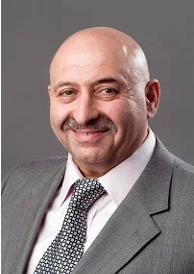
Full Professor in Engineering of Innovation at INSA Strasbourg, France
We Taught Machines to Generate Ideas. Can We Teach Them to Invent?
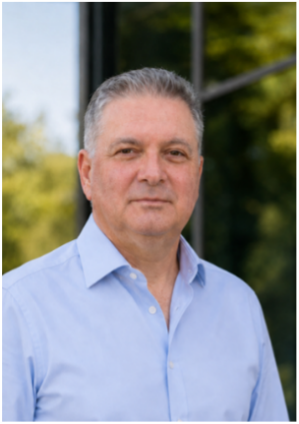
CEO of TRIZ Biopharma Innovations LLC, USA
For the Centennial of Genrich Altshuller. Stages of the Grand Goal: From Engineering Challenges and TRIZ-AI to Bioengineering, Dynamic Therapeutics, and Situational Governance
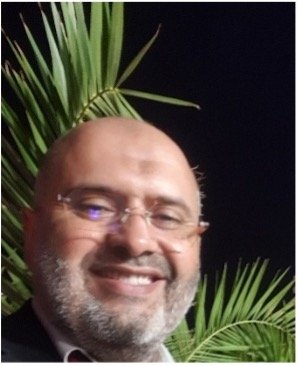
Full Professor at the Technical University of Cluj-Napoca, Romania
Reinventing Invention: TRIZ, AI, and the Dynamics of Contradictions

Director, Innovation Insights, Corning Incorporated, USA
Innovation Without Scarcity: The Case for TRIZ When Ideas Are Free
Full Professor at the ISGIS, University of Sfax, Tunisia
Novel Artificial Intelligence Optimization Methods: The "Dhouib-Matrix"
Denis Cavallucci is co-founder and former President of the European TRIZ Association (ETRIA). He has spent three decades advancing the understanding, formalization, and computational modelling of inventive processes.
His research pioneered the integration of TRIZ with artificial intelligence, from computer-aided inventive design to automatic extraction of problems and contradictions from patents and scientific literature.
He currently heads the AIARD industrial chair, applying these methods to real-world R&D challenges, with research interests spanning problem graphs, executable ARIZ, inventive design benchmarks, and the intersection of TRIZ, AI, and optimization.
Dr. Boris Farber is a Dual PhD, ScD, Professor, Academician, and TRIZ Master. With more than four decades of interdisciplinary experience, he combines TRIZ, artificial intelligence, mathematical modeling, bioengineering, and pharmaceutical innovation.
For over 35 years, he has applied TRIZ to drug development, pioneering dynamic, self-adaptive and self-assembled “quasi-living” therapeutics designed to respond to individual patient needs.
His work includes MoLRx, Albuvir, adaptive insulin, and other innovative therapeutic platforms. Dr. Farber holds more than 215 patents and has authored over 500 scientific publications and books.
Stelian Brad is Dean Faculty of Industrial Engineering. He leads research activities in innovation engineering, artificial intelligence, robotics, and industrial transformation.
He is President of Cluj IT Cluster, Head of the DIH4Society European Digital Innovation Hub, and an Associate Member of the Academy of Technical Sciences of Romania.
Former President of ETRIA (2020–2024), he currently serves on its Executive Board and co-founded ISAIII. With over three decades of academic and industrial experience and more than 200 research and innovation projects, his research focuses on TRIZ, AI-powered invention, functional negation, generative AI, and systematic innovation.
Jim Belfiore has led over 700 R&D engagements for global Fortune 500 companies.
His previous leadership roles include Senior Vice President at Clarivate, Managing Director at IHS Markit (Invention Machine), and founder of Sensorinus.
Holding a B.Sc. in Astronomy and Physics from UMass Amherst, Belfiore is a global educator whose innovation and problem-solving courses feature on LinkedIn Learning and university catalogs worldwide.
In his role at Corning, he specializes in developing AI and innovation strategies across research and technology organizations.
Souhail Dhouib is a leading researcher in Artificial Intelligence, Business Analytics and Industrial Engineering.
He is recognized among the World’s Top 2% Scientists by Stanford University and Elsevier and ranked 21st among the world’s most cited researchers in the discipline of Metaheuristic by Google Scholar.
His work advances combinatorial optimization, robotics, finance, fuzzy systems, and multi-objective decision-making.
He has authored influential journal articles and actively serves as editorial board member, keynote speaker, and conference chair in international AI and optimization forums.
Synergies of TRIZ, AI, and Optimization for Complex Systems Design 2026
The International Conference TRAI 2026 aims to bring together researchers, industry professionals, engineers, designers, and innovation specialists to examine the synergy between TRIZ, Artificial Intelligence (AI), and Optimization as a cornerstone for next-generation problem solving, inventive design, and intelligent decision-making.
The convergence of these three domains is profoundly reshaping the way complex systems are conceived, analysed, and optimized. While artificial intelligence and optimization techniques offer powerful computational and analytical capabilities, they often remain constrained by predefined models, limited design spaces, or local optima. In contrast, TRIZ, grounded in systematic inventive principles and contradiction-oriented thinking, provides a structured framework to overcome these limitations, stimulate breakthrough innovations, and guide original exploration beyond conventional solutions.
TRAI 2026 invites original contributions addressing theoretical advances, methodological frameworks, and real-world applications that integrate TRIZ theory, artificial intelligence, and optimization into unified and coherent processes. The conference aims to foster interdisciplinary exchanges and promote innovative solutions applicable across a wide range of scientific, industrial, and societal domains.
Aims and Objectives
TRAI 2026 pursues several scientific and industrial objectives:
- Scientific and Methodological Objectives
- Develop integrated models combining TRIZ, AI, and optimization for innovative design, inventive and systematic innovation processes.
- Explore AI-enhanced creativity using generative models, symbolic reasoning, large language models, and hybrid approaches.
- Investigate methods enabling autonomous or semi-autonomous inventive systems.
- Explore sustainability challenges through eco-inventive design.
- Industrial and Applied Objectives
- Present computational tools and platforms enabling AI-driven innovation workflows.
- Demonstrate real applications in complex systems (engineering, healthcare, energy, mobility, manufacturing, etc.).
- Integrate TRIZ and AI in decision support (risk management, safety, supply chains, and operations).
- Strategic Objectives
- Promote dialogue between academia and industry for next-generation innovation systems.
- Address ethical, legal, intellectual property, and societal implications of AI-enabled inventive design.
- Support emerging research and foster international collaboration.
Main Topics of Interest
TRAI 2026 welcomes contributions in (but not limited to) the following areas:
- A. TRIZ, Inventive Thinking & Innovation Science
- Advances in TRIZ theory and computational TRIZ
- TRIZ for complex engineering systems
- Contradiction analysis and inventive principles enhanced by AI
- TRIZ-based modelling of innovation processes
- Agent-based and multi-agent TRIZ systems for problem decomposition, contradiction resolution, and solution synthesis
- B. Artificial Intelligence for Creativity & Engineering
- Generative AI, large language models, and design assistants
- Machine learning and symbolic AI for engineering
- Hybrid reasoning and intelligent search for inventive solutions
- AI-enhanced decision-making in engineering and operations
- AI-supported ARIZ workflows
- Integration of TRIZ with automated knowledge extraction from patents, standards, and scientific literature
- Evaluation and validation of AI-generated inventive concepts (robustness, feasibility, IP relevance, FTO)
- Human–AI collaboration models in inventive problem-solving (roles, trust, responsibility)
- C. Hybrid TRIZ–AI–Optimization Frameworks
- Unified models for inventive engineering
- Digital twins for innovation and design
- Autonomous innovation systems
- D. Applications in Engineering, Industry, Transport, Health, etc.
- Manufacturing, additive manufacturing, and industrial processes
- Energy systems, smart grids, and sustainability
- Healthcare engineering and biomedical design
- Supply chains, logistics, and operations management
- ICT, cyber-physical systems, and Industry 5.0
- E. Ethics, Education, Governance, and Innovation Management
- AI creativity and intellectual property
- Responsible AI in creative systems
- Innovation governance and strategic management
- Socio-economic impacts of AI-driven inventive systems
- Various teaching approaches of TRIZ-AI for inventive design
Special Sessions (Proposed)
The conference will include several invited special sessions. Researchers wishing to organize special sessions may submit proposals to the Organizing Committee.
Examples:
- AI-Driven TRIZ for Industrial Problem-Solving
- Optimization and Inventive Design in Mechanical and Manufacturing Engineering
- Digital Twins and AI for System Innovation
- Multi-Objective Optimization for Sustainable and Resilient Inventive Systems
- Explainable AI and Human–Machine Co-Creation
- PhD Forum on TRIZ, AI, and Optimization
- and related topics
Call for Contributions
We invite researchers, practitioners, and industry professionals to submit papers, case studies, and presentations on the topics outlined above. Contributions should be original and add significant value to the field of AI-powered innovation and TRIZ methodology.
Submission Guideline
Formats:
- Full papers (6–12 pages) – Research and practical implementation contributions
- Short papers (1–2 pages) – Work in progress (only oral presentation)
- Posters/Demos (1 page)
All submissions must follow the Springer Conference Proceedings Template (Word or LaTeX).
Review Process:
- A minimum of two reviewers per paper
- Evaluation criteria: originality, scientific quality, clarity, relevance
Important Dates
- Opening of Submissions: January 15, 2026
- Abstract Submission Deadline:
February 15, 2026Extension: March 01, 2026- Notification of Abstract Acceptance:
March 15, 2026Extension: March 23, 2026- Full Paper Submission Deadline:
May 15, 2026Extension: May 25, 2026- Notification to Authors: June 15, 2026
- Camera-Ready Submission: July 15, 2026
- Conference Dates: October 21–23, 2026
Publication Opportunities
Conference Proceedings All accepted papers will be published in the Springer Proceedings (series to be confirmed).
Extended Versions in Indexed Journals Selected high-quality papers will be invited to submit extended versions for publication in special issues or fast-track review in:
Examples of journals will be announced soon.Committees
Professional & Scientific Committee
This Committee of TRAI 2026 is composed of a distinguished panel of academic and industrial experts with recognized expertise in the fields of TRIZ, AI, and optimization. (To be completed)
- Abdessalem Jerbi: University of Sfax, Tunisia
- Alaeddine Zouari: University of Sfax, Tunisia
- Amadou Coulibaly: INSA de Strasbourg, France
- Anna Kruzenshtern: LUT University, Finland
- Ayoub Tighazoui: University of Strasbourg, France
- Belfiore Jim: Innovation Insights for Corning, USA
- Christian Spreafico: University of Bergamo, Italy
- Christian Thurnes: HS Kaiserslautern, Germany
- Christoph Dobrusskin: Philips, The Netherlands
- Claudia Hentschel: HTW, Germany
- Davide Russo: University of Bergamo, Italy
- Denis Cavallucci: INSA de Strasbourg, France
- Diala Dhouib: University of Sfax, Tunisia
- Didérot-Déraillet Tadja: Polytech Montréal, Canada
- Elizaveta Girshova: LUT University, Finland
- Etienne Meriaux: CHANEL, France
- Fatma Lehyani: University of Sousse, Tunisia
- François Marmier: University of Strasbourg, France
- Hicham Chibane: INSA de Strasbourg, France
- Ioana Filipas: University of Strasbourg, France
- Irshad Yahya: University of Engineering and Technology, Pakistan
- Jaroslaw Turkiewicz: Warsaw University of Technology, Poland
- Jens Träger: Founder & CEO – Truinorva GmbH, Germany
- Jerzy Chrzaszcz: Warsaw University of Technology, Poland
- Jihene Jlassi: University of Sfax, Tunisia
- Joanna Majchrzak: Poznan University of Technology, Poland
- Jung-Hyeon Kim: Kumoh National Institute of Technology, Korea
- Kai Hiltmann: Coburg University, Germany
- Karim Kammoun, University of Sfax, Tunisia
- Lorenzo Maccioni: Free University of Bozen-Bolzano, Italy
- Marek Mysior: Wroclaw University of Science and Technology, Poland
- Marwa Ben Moallem: ESTA Belfort, France
- Mickael Gardoni: ÉTS, Canada, Québec
- Mohamed Amir Keskes: CY Cergy Paris University, France
- Mostafa Ghane: M5 Solutions Sdn Bhd, Malaysia
- Nicolas Maranzana: ENSAM, Paris, France
- Nicolas Douard: INSA de Strasbourg, France
- Oleg Abramov: GEN TRIZ, Russia
- Oleg Feygenson: MATRIZ Official, Samsung, Korea
- Pavel Livotov: Offenburg University, Germany
- Pavel N. Fimin: GEN TRIZ, LLC, Russia
- Peiman Porbaha: TRIZ & Innovation Researcher, Iran
- Piotr Palka: Warsaw University of Technology, Poland
- Rachide Benmoussa: Cadi Ayyad University, Morocco
- Ralf Laue: University of Applied Sciences Zwickau, Germany
- Rami Gdoura: University of Technology of Belfort-Montbéliard, France
- Remy Houssin: University of Strasbourg, France
- Robert Nowak: Warsaw University of Technology, Poland
- Roland Deguio: INSA de Strasbourg, France
- Sana Bouajaja: University of Carthage, Tunisia
- Sebastien Dubois: INSA de Strasbourg, France
- Souhail Dhouib: University of Sfax, Tunisia
- Stelian Brad: Technical University of Cluj-Napoca, Romania
- Stephane Negny: INP Toulouse ENSIACET, France
- Tiziana Bertoncelli: ANSYS Germany GmbH, Germany
- Tugba Cetinturk: Innovation Management Consultant, Türkiye
- Vladimir Sizikov: SIEGENIA GROUP, Germany
- Wafik Hachicha: University of Sfax, Tunisia
- Zied Hajej: University of Lorraine, France
Organizing Committee
- General Chair: M. Alaeddine Zouari
- Program Chairs: Ms. Diala Dhouib, M. Rémy Houssin
- Publication Chair: M. Alaeddine Zouari, Ms. Diala Dhouib, M. Rémy Houssin, Ms. Fatma Lehyani
- Industrial Liaison Chair: Ms. Fatma Lehyani
- Finance Chair: M. Karim Kammoun
- Publicity and Media Chair: M. Mohamed Amir Keskes, Ms. Marwa Ben Moallem, M. Rami Gdoura
- Local Organization Team: M. Nizar Mtibaa, Ms. Khouloud Dammak, Ms. Ibtissem Alguirat, Ms. Yasmine Bouaziz, Ms. Anwar Jlalia, Ms. Imene Bnouni, Ms.Mariam Mechri
Length: 8–12 pages (including figures and references) Templates: Use Springer LNCS templates:
Springer LNCS Templates
Submission Formats: Note: Please follow the templates and page limits strictly.Paper Submission Guidelines
Conference partners







Registration for TRAI 2026 is now open. We look forward to welcoming you to Hammamet, Tunisia!
Register Now